
HOME BUYER
PERCEPTION
Harmony Homes by Amanda is a strategic listing and home design consulting brand that helps sellers and real estate investors see their property the way buyers do.
The focus isn’t decoration or trends — it’s identifying layout, presentation, and perception risks that quietly kill value and stall sales.

Is your home not selling — or are you about to renovate a property?
In both cases, the most expensive mistake is acting without understanding how buyers perceive your property.
We provide clarity before you spend money.
Is your home sitting on the market with no offers? It’s not the price; it might be a perception problem.
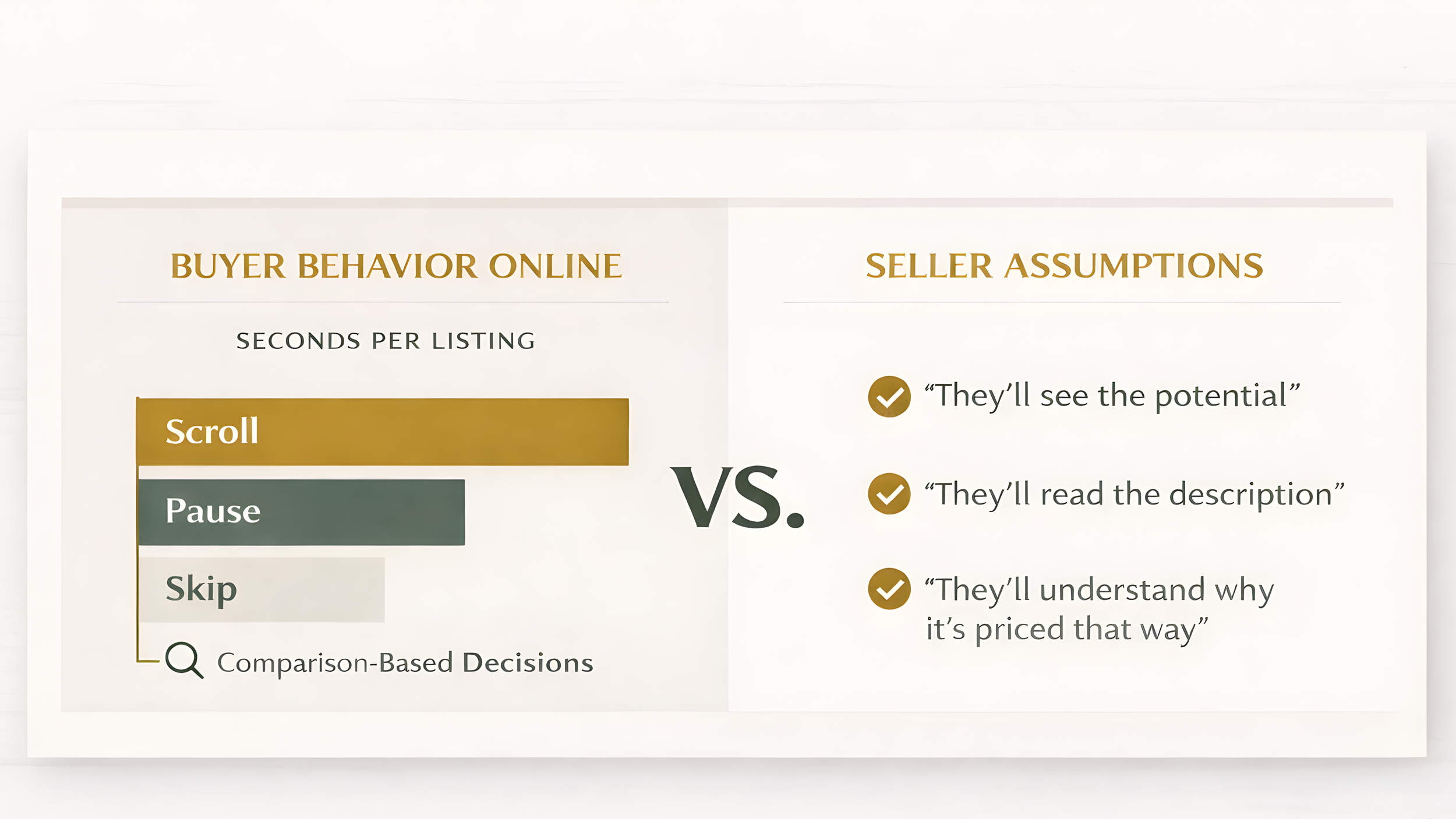
Whether you are in a competitive city or a quiet suburb, buyers decide in 7 seconds if they love or hate your listing. Discover the hidden visual barriers that are killing your sale.

I’m a real estate agent and have worked with Amanda on multiple challenging listings.
What sets her apart is her ability to identify why a home isn’t connecting with buyers — not just how to make it look better.
Once the strategy was clear, every decision that followed made sense.
The homes didn’t just move faster — they were positioned more effectively and achieved stronger outcomes.
I recommend her work to agents and sellers who want clarity before making costly decisions.
— Mike DienerHOW BUYERS DECIDE
Buyers don’t start with numbers.
They start with imagination.
In seconds, they ask:
“Can I see my life here?”
“Does this feel like my home?”
“Does this match what I’m looking for?”
If the answer is yes, they tolerate imperfections.
If the answer is no, every detail becomes a problem.
That first impression controls everything that follows.
HOW OUR SYSTEM WORKS
Every unsold home fails in one of three areas:
Perception — How it looks and feels online
Positioning — How value compares to price
Competition — How it performs against nearby listings
Our work identifies where friction exists — and how to remove it.
Our Services

-
Your home is listed.
Buyers are viewing it.
But they’re not engaging.This professional analysis evaluates one thing only:
How buyers interpret your listing photos and presentation in the first few seconds.
Before assuming it’s the price, the market, or “bad luck,” you need to know if perception is the real problem.
No calls.
No pressure.
Just an objective evaluation.Delivered within 24 hours.
-
Your home is listed.
Buyers are viewing it.
But they’re not choosing it.That means something in your positioning is failing.
Not just how it looks —
but how it compares, how it’s priced, and how it’s being interpreted.Before reducing your price or making random changes,
you need to know exactly what is weakening your leverage.This is where guessing stops.
-
Strategic Pre-Renovation Screening
Most flip losses happen before renovation begins.
This analysis reviews your property, market, and buyer expectations — before you spend a single dollar.
It identifies major risks, over-improvement traps, and misaligned upgrades that quietly destroy profit.
This is high-level strategic guidance.
-
Before investing in staging, confirm whether it will actually change buyer behavior for your listing.
-
Compassionate, step-by-step support to prepare your loved one’s home for sale.

Meet the Founder
“Doing more is easy.
Knowing what actually matters is not.”
I don’t design homes to live in.
I position homes to sell.
My work begins where most real estate advice stops — with a strategy rooted in how buyers actually perceive a home.
Before anything is redesigned, staged, or adjusted, my role is to bring clarity — so every next decision makes sense.